Introduction
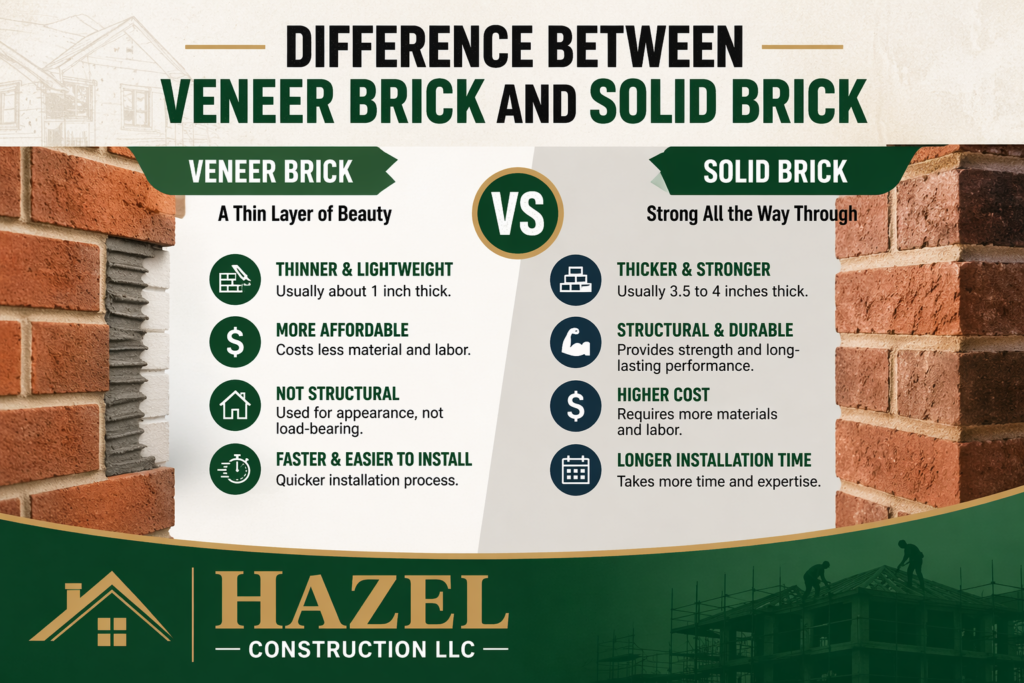
Venner bricks are more energy efficient, affordable, lightweight and easier to install than solid bricks. Solid bricks are more resistant to fire and weather and require skilled labor. While both solid bricks and veneer bricks use the same construction materials, the main difference lies in the method of installation. Solid bricks are the load-bearing part of the structure, consisting of several layers, whereas brick veneer is the single outer layer attached to the steel or wooden framing with metal ties.
Solid Brick vs. Brick Veneer: The Ultimate Comparison Guide
The main difference between solid bricks and brick veneer is a story of tradition vs. innovation. A sturdy, solid brick wall offers timeless strength but is a poor insulator and may cost you a fortune. Modern homes, built with a wooden frame with a stylish brick veneer, save energy and money. Packed with insulation, they are cheaper and faster to install than solid bricks, offering the same classic aesthetics. The right choice for you depends on the budget, structural requirements and desired performance.
| Did you know?Solid brick is a poor insulator. In contrast, brick veneer buildings are more energy efficient. |
If you are searching for brick veneer vs solid bricks, here is your comparison guide to understanding everything about it.
- What is Brick Veneer and Its Advantages?
Made from cement, aggregates and pigments, brick veneer mimics solid wood and is an affordable and energy-efficient alternative to solid bricks. In brick veneer construction, concrete, wood or steel frame forms the structure and the backwall on which the brick veneer is applied with metal ties for aesthetic purposes.
With a range of design possibilities, brick veneers can be applied to both interior and exterior surfaces and require minimal upkeep. In brick veneers, the air cavity between the brick and the frame is filled with insulation material, which provides better energy efficiency and thermal resistance compared to solid masonry.
- Benefits of Solid Brick Construction
A solid masonry building consists of several layers, forming a sturdy structure. Made from clay, sand and water, molded and fired in a kiln, solid bricks are extremely durable, fire-resistant and give a classy, heavy look.
With ultimate mass, they provide excellent soundproofing and stability, but provide poor energy efficiency, are expensive to install and more difficult to repair. Buildings constructed with solid bricks have higher resale value due to their durability.
| Veneer Brick vs. Solid Brick | ||
| Energy efficiency | Veneer bricks are highly energy efficient. | Bricks are poor insulators. |
| Costs | More affordable as fewer materials are required. | Expensive due to weight (shipping and the need for skilled masonry). |
| Durability | Highly durable and weather-resistant. | Durable and lasts a long time. Resistant to weather and fire. |
| Installation | Lightweight and easy installation. | High material weight. requires a specialized construction method. |
| Maintenance | Requires minimal upkeep (inspection of weep holes, flashing and joints) | Requires low maintenance (periodic repointing of mortar and proper drainage. |
| Seismic performance | Depends on the quality of the metal ties connecting it to the structural frame. | More stable in earthquakes. |
| Sound proofing | Thinner and lighter materials do not block out sounds | Excellent soundproofing |
Conclusion
Veneer bricks are fast gaining traction due to their better energy efficiency, affordability and easy installation. It offers a single layer of aesthetics vs. load-bearing solid brick forming structural support. Solid bricks need added insulation to perform well and save energy. Both offer timeless beauty and curb appeal. The right choice for you depends on your structural requirements, local weather, budget and the desired performance.
FAQs
1. What is the main difference between veneer brick and solid brick?
The main difference is structural. Veneer brick is a thin decorative layer attached to a building’s exterior, while solid brick is a full-thickness material used for structural support as well as appearance.
2. Which is more durable: veneer brick or solid brick?
Solid brick is generally more durable because it is thicker and load-bearing. However, veneer brick is still highly durable when properly installed and maintained.
3. Is veneer brick cheaper than solid brick?
Yes, veneer brick is usually more affordable because it uses less material and requires less labor compared to solid brick construction.
4. Can veneer brick be used for structural support?
No, veneer brick is not load-bearing. It is only used for decorative purposes and must be attached to a structural frame like wood or steel.
5. Does solid brick provide better insulation than veneer brick?
Solid brick offers better thermal mass, but modern veneer systems often include insulation layers that can provide equal or better overall energy efficiency.
6. Which is easier to install: veneer brick or solid brick?
Veneer brick is easier and faster to install because it is lightweight and does not require the same structural foundation as solid brick.
7. How long do veneer brick and solid brick last?
Both can last decades. Solid brick structures can last over 100 years, while veneer brick can also last many years with proper installation and maintenance.
8. Can veneer brick look like real solid brick?
Yes, veneer brick is designed to closely mimic the appearance of solid brick, making it difficult to tell the difference visually.
9. Is maintenance different for veneer brick vs solid brick?
Maintenance is similar for both, but veneer brick may require occasional inspection of the ties and backing structure, while solid brick may need repointing over time.
10. Which is better for residential construction: veneer or solid brick?
Veneer brick is more commonly used in modern residential construction due to its cost-effectiveness and flexibility, while solid brick is often chosen for its strength and traditional appeal.